

Y Alimohamadi, M Janani, AR Khoshdel*
Abstract
Background: Concurrent to changes in lifestyles, non-communicable diseases such as cancers are one of the main causes of mortality. Identifying effective factors on the survival status of cancer patients is essential for health practitioners.
Purpose: The current study aimed to investigate the effect of sociodemographic and health indices on cancer survival among the Iranian military community (MC).
Material and methods: The required data were extracted from the registered cases in the Iranian MC insurance organisation. The Kaplan-Meier method, logrank test and Cox proportional hazard regression model were used to analyse data. All analyses performed using SPSS 22.
Results: Overall, 31 657 cancer cases were registered during the understudied period. In total, 14 698 (46.4%) and 16 959 (54.6%) of cases were males and females, respectively. The median survival time among males and females was 5.58 years (95% CI: 5.32–5.84) 11.41 years (95% CI: 10.70–12.12, P<0.001), respectively. The
hazard ratio for gender (female) was 0.54 (95% CI: 0.51–0.56, P<0.001) and for age was 1.08 (95% CI: 1.03– 1.14, P<0.001). The number of rural, urban and active health centres, hospitals and hospital beds, clinics and physicians and the HDI did not show a significant effect on the risk of death of cancer patients (P>0.05).
Conclusion: It seems that the coverage of health services in all provinces of Iran is the same, and the inequality is few. However, other variables such as age and gender are influential factors in cancer deaths.
Keywords: Survival analysis, cancers, Iranian military
Conflict of interest: The authors did not have any competing interests
Introduction
The global burden of disease has changed in both developed and developing countries over the past century, and the pattern of disease has shifted from infectious to non-communicable.1 Cancer is one of the most important non-communicable disease and the second leading cause of death and disability globally, with about 17.5 million new cases per year and 8.7 million deaths annually. It has placed a heavy burden on health systems.2 The increasing incidence of non-communicable diseases is affected by population ageing, sedentary lifestyle, stress and increased unhealthy behaviours (such as cigarette smoking and unhealthy diet).3
Lung, breast and colorectal cancers are the most common cancers in the world.4 In addition, prostate cancer is the most common cancer among men, and breast cancer is the most common cancer in women.5 In Iran, cancer is the third cause of mortality after coronary heart disease and injuries, and cancer incidence has an increasing trend.3,6,7 This increasing trend is affected by different causes. For example, stress is an influential factor in the occurrence of many non-communicable diseases, including cancer.
Military personnel and communities are exposed to higher levels of job stress than other groups due to the nature of their job and high risk of stressful conditions.8-10 Compared to the general population, the military community (MC) may not have adequate access to health services due to their occupational conditions, leading to late diagnosis, worsening disease prognosis and increased mortality. Thus, the distribution of health services, such as hospitals and primary healthcare centres has an important role in reducing deaths. The human development index (HDI) is one of the main indicators that reveal the level of development of societies. This indicator comprises three factors that can affect morbidity and mortality, including life expectancy at birth, gross national income per capita, and mean and expected years of schooling. Identifying factors affecting the survival of cancer patients can be very helpful for designing prevention programs. Most studies focused on cancer survival investigate the general population. Because of the probable effect of socioeconomic, sociodemographic and health indices on cancer survival among the Iranian MC and lack of similar studies, the current study aimed to investigate and identify the effect of sociodemographic factors and health indices on cancer survival among the Iranian MC.
Materials and methods
Data
In this retrospective study, the required data on cancer patients were extracted from the Iranian MC insurance organisation’s registered cases. These data included variables such as age, gender, type of cancer, time of diagnosis (month and year), and patients’ last status (alive or deceased). All registered cancers in the Iranian MC (active, retired, family, veterans) diagnosed and registered from March 2007 to March 2017 were entered into this study. Also, other data such as the number of rural, urban and active health centres, hospitals and hospital beds, clinics, HDI and the number of physicians in different provinces of Iran were extracted from Iran’s statistical centre. First, all data were entered into Excel, and after cleaning, they provided the main analysis.
Statistical analysis
Descriptive analyses of the variables were expressed as mean (±Standard Deviation = SD), median, number and proportion (%). The Kaplan-Meier method was used to show survival for a period after cancer diagnosis among patients; also, the logrank test was used to compare survival between two genders. To investigate the effect of the explanatory variables such as age, gender, HDI, number of hospitals, physicians and rural health centres in different provinces, etc. on survival time, a Cox proportional hazards regression model was used. Also, the adjusted hazard ratio (HR) as a measure of association with 95% confidence interval (CI) was calculated. The analysis excluded missing data. All P-values are based on two-tailed tests, and a P-value less than 0.05 was considered statistically significant. The data were analysed using SPSS version 22.0.
Ethics approval
This study was registered and approved by the Ethical Committee of the AJA University of Medical Sciences (IR.AJAUMS.REC.1398.241).
Results
Overall, 31 657 cancer cases were registered during the understudied period. The mean age of cases was 63.45 ± 15.24 years. Five-thousand and three (15.8%) of total cases occurred in individuals less than 50 years old, and 26 653 (84.2%) of cases occurred among more than 50 years (more information is shown in Table 1). About 9017 (28.5%) of cases died during the mentioned period. Overall, 5298 (58.8%) deaths occurred among males, and 3719 (41.2%) deaths occurred among females. The information about the more prevalent cancers and the number of deaths among the Iranian MC can be seen in Table 2. The median survival time among all cancer patients was 8.37 years (95% CI: 8.02–8.71) (see Figure 1). In total, 14 698 (46.4%) cases were male, and 16 959 (54.6%) cases were female. The median survival time among male patients was 5.58 years (95% CI: 5.32–5.84) and among female patients was 11.41 years (95% CI: 10.70–12.12). There were significant differences between males and females in the survival time (P<0.001) (see Figure 2). The median survival time among pensioners, retired and employed cases was 3.29 year (95% CI: 3.11–3.46), 14.33 year (95% CI: 13.50–15.16), 7.23 years (95% CI: 6.47–7.99), respectively, and there was a significant difference between different job status about the survival time (P<0.001). More information is shown in Table 3.
According to the result of Cox regression, the HR for gender (female) was 0.54 (95% CI: 0.51–0.56, P<0.001). The HR for age was 1.08 (95% CI: 1.03–1.14, P<0.001). It means that the death hazard in females was 0.54 (95% CI: 0.51–0.56) times lower than males (46%). Increasing one year of age increased death hazard by 1.08 times (95% CI: 1.03– 1.14). The HR of cancer death among retired and employed patients compared with pensioners was 0.05 (95% CI: 0.001–0.7, P=0.03) and 0.001 (95%CI: 0.0001–15.53, P=0.16), respectively. The HDI, number of rural, urban and active health centres, hospitals and hospital beds, clinics, and physicians did not show a significant effect on the risk of death for cancer patients (Table 4). This shows that the difference in the mentioned factors between different provinces and the Iranian MC was not significant.
Figure 1. The survival function of all types of cancers among the Iranian military community
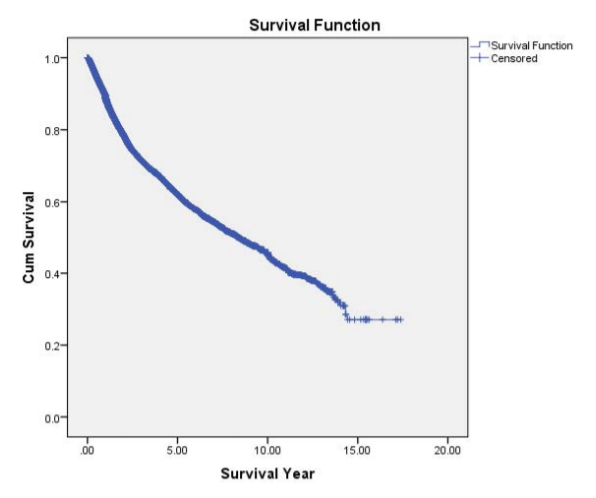
Figure 2. The survival functions of all types of cancers among the Iranian military community, according to gender
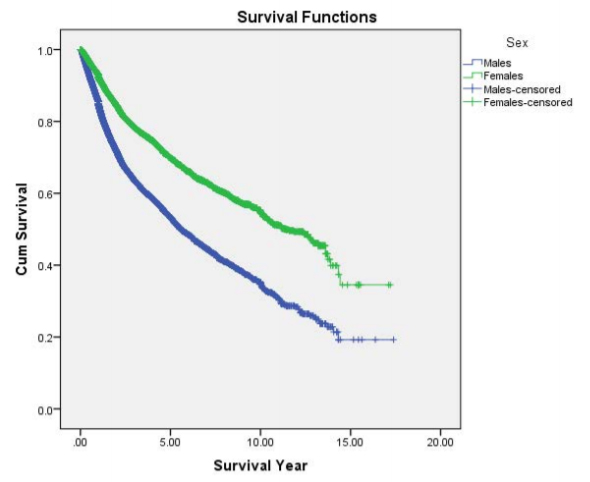
Table 1. The frequency of cancer cases according to some variables
[su_table responsive=”yes”]
| Variable | N (%) |
|---|---|
| Gender | |
| Male | 14698 (46.6) |
| Female | 16959 (53.6) |
| Job status | |
| Pensioner | 8189 (25.9) |
| Retired | 18480 (58.4) |
| Employed | 4988 (15.8) |
| Age | |
| ≤50 | 5003 (15.8) |
| >50 | 26653 (84.2) |
| Overall | 31657 |
[/su_table]
Table 2. Most prevalent cancers and the number of deaths due to each type of cancer among the Iranian military community
[su_table responsive=”yes”]
| Type of cancer | N (%) | Number of deaths (%) |
|---|---|---|
| Breast | 8320 (0.26) | 977 (0.11) |
| Prostate | 3059 (0.10) | 725 (0.08) |
| Colon | 2307 (0.07) | 650 (0.07) |
| Stomach | 1823 (0.06) | 982 (0.11) |
| Bladder | 1467 (0.05) | 407 (0.05) |
| Ovarian | 765 (0.02) | 233 (0.03) |
| Lung | 692 (0.02) | 618 (0.07) |
| Brain | 545 (0.02) | 397 (0.04) |
| Rectum | 536 (0.02) | 310 (0.03) |
| Other cancers | 12143 (0.38) | 3718 (0.41) |
| Total | 31657 (100) | 9017 (100) |
[/su_table]
Table 3. The estimates of mean and median of survival time according to gender and job status in Iranian military community
[su_table responsive=”yes”]
| Variables | Mean | Median | p | ||||||
| Estimate | SE | 95% CI | Estimate | SE | 95% CI | ||||
| Lower bound |
Upper bound |
Lower bound |
Upper bound |
||||||
| Gender | |||||||||
| Male | 7.48 | 0.14 | 7.21 | 7.75 | 5.58 | 0.13 | 5.32 | 5.84 | <0.001 |
| Female | 10.31 | 0.17 | 9.98 | 10.64 | 11.41 | 0.36 | 10.70 | 12.12 | |
| Job status | |||||||||
| Pensioner | 5.07 | 0.10 | 4.87 | 5.27 | 3.29 | 0.09 | 3.11 | 3.46 | <0.001 |
| Retired | 11.57 | 0.19 | 11.20 | 11.94 | 14.33 | 0.42 | 13.50 | 15.16 | |
| Employed | 8.72 | 0.22 | 8.29 | 9.15 | 7.23 | 0.39 | 6.47 | 7.99 | |
| Overall | 8.99 | 0.11 | 8.77 | 9.22 | 8.37 | 0.18 | 8.02 | 8.72 | |
[/su_table]
Table 4. Factors associated with the cancer mortality among Iranian military community
[su_table responsive=”yes”]
| Variables | B | SE | Wald | df | P | Exp (B) | 95.0% CI for Exp(B) | |
|---|---|---|---|---|---|---|---|---|
| Lower | Upper | |||||||
| Gender (females) | -0.61 | 0.21 | 5.42 | 1.00 | 0.001 | 0.54 | 0.51 | 0.56 |
| Age | 0.08 | 0.03 | 8.55 | 1.00 | 0.001 | 1.08 | 1.03 | 1.14 |
| Number of rural health centres | -1.07 | 1.08 | 0.97 | 1.00 | 0.32 | 0.34 | 0.04 | 2.87 |
| Number of urban health centres | -0.71 | 0.75 | 0.88 | 1.00 | 0.35 | 0.49 | 0.11 | 2.16 |
| Number of active rural health centres | 0.27 | 1.03 | 0.07 | 1.00 | 0.79 | 1.31 | 0.18 | 9.79 |
| Number of hospitals | 0.58 | 2.02 | 0.08 | 1.00 | 0.78 | 1.78 | 0.03 | 93.70 |
| Number of hospital beds | -0.80 | 1.07 | 0.56 | 1.00 | 0.45 | 0.45 | 0.06 | 3.63 |
| Number of clinics | -0.07 | 1.30 | 0.00 | 1.00 | 0.96 | 0.94 | 0.07 | 11.92 |
| HDI | 0.22 | 0.80 | 0.08 | 1.00 | 0.78 | 1.25 | 0.26 | 5.96 |
| Number of literacy | -0.35 | 1.60 | 0.05 | 1.00 | 0.83 | 0.71 | 0.03 | 16.29 |
| Number of physicians | 1.07 | 0.85 | 1.62 | 1.00 | 0.20 | 2.93 | 0.56 | 15.34 |
| Pensioner | 1 | – | – | – | – | – | – | – |
| Retired | -3.09 | 1.39 | 4.94 | 1.00 | 0.03 | 0.05 | 0.001 | 0.70 |
| Employed | -6.71 | 4.82 | 1.94 | 1.00 | 0.16 | 0.001 | 0.0001 | 15.53 |
[/su_table]
Discussion
This study aimed to investigate the effect of sociodemographic and health indices on cancer survival among the Iranian MC. Our results showed that the median survival time among all cancer patients was 8.37 years (95% CI: 8.02–8.71) (Figure 1). This result was higher than that of Lin et al. (1.7 years) in US military patients,11 Brzezniak et al. (1.2 years) in US military lung cancer patients,12 Mette et al. (4.7 years)—which examined 13 cancers,13 Ssentongo et al. (5-year survival: 52.8%) in the systematic review of Africa,14 Moth et al. (1.5 years) in adults with advanced cancer,15 or Gholizadeh et al. (5-year survival: 47.3%) in patients with larynges cancer in Iran.16 The results were consistent with that of Kongsiang et al. (8.37 years) in patients with breast cancer.17 These differences may be due to age or more advanced disease. Previous studies have shown that cancer patients’ survival rate has been on the rise in recent years.18, 19
Our findings showed that increasing one year in the age of participants adjusted for gender and job status has significantly increased (HR=1.08, 95% CI: 1.03–1.14, P<0.001) the hazard ratio of cancer death (Table 2). The previous study’s result was consistent with our findings.16, 19-21 Age may affect survival in older patients with a higher prevalence of comorbidities compared to younger patients.22,23 Also, it is a well-known occurrence that medical treatment was incomplete or substandard, usually in the elderly population, especially in oncology fields.24 Multiple studies have shown that patients with older age receive less treatment or even no treatment compared to younger patients with a similar diagnosis.25-27
Furthermore, our result showed that gender (female) has a significant association with death (HR=0.54, 95% CI: 0.51–0.56, P<0.001). Most studies in the various type of cancer were consistent with our findings.20, 21 However, some studies could not find an association between gender and cancer death.16
In interpreting this association, we should pay attention to the fact that in Iran, as in other countries, females have a higher life expectancy than males 28. However, if it is advanced stage cancer, there would be no need to consider life expectancy. Nevertheless, cancer was similarly curable for both genders, and survival after treatment would depend on the life expectancy, 29 which would be longer for women in Iran. Our study also showed that HR of death adjusted for age and gender in retired and employed patients was HR=0.05 (95% CI: 0.001-0.7, p=0.03) and HR=0.001 (95% CI: 0.0001-15.53, p=0.16), respectively in comparison with the pensioner. The lower survival rate in the pensioner group can be due to older age and other comorbidities. Since in the health centres, diagnostic tests are performed to detect the patients in the early stage of disease in high-risk individuals (secondary prevention). Survival was expected to be higher in areas with higher numbers of health centres. However, this relationship was not seen in our study (HR=0.49, 95% CI: 0.11–2.16, P=0.35 urban health centres) (HR: 0.34, 95% CI: 0.04–2.9, P=0.32 rural health centres) (Table 2). This may be because, among the participants in this study, the variance of the coverage of health networks is not different among the different provinces.
Furthermore, most cancers require hospital care. Previous studies have shown an association between hospital care and survival in cancer patients.30 However, this study did not find a significant relationship between hospital variables (such as the number of hospital beds, etc.) and survival rate. This may be due to patients in deprived locations are referred to a better-equipped hospital for treatment, and the quality of services provided to patients had slight variance.
The current study had some limitations, including, first, we didn’t have more information about the clinical stage of cancer and other clinical data. Second, the exact time of death in the patient was not known, so we used the date of cancellation of the insurance booklet. Despite the mentioned limitations, the study has very strong components, including the large sample size. Hence, the reproducibility of the results is acceptable, as is the design of the study. Also, the use of registry data increases the generalisability of the findings to the population.
Conclusion
It seems that the access to health services among the Iranian MC in all provinces is the same, and the inequality is few. Except for access to health services, improving lifestyle, reducing environmental pollutant exposure, decreasing anxiety levels, increasing people’s awareness of cancer, and the benefits of early detection (primary prevention), can reduce morbidity and mortality of cancers among the Iranian MC.
Corresponding Author: Alireza Khoshdel alikhoshdel@yahoo.com
Authors: Yousef Alimohamadi1, Majid Janani2, Alireza Khoshdel3*
Author Affiliations:
- Military Epidemiology Research Center, Aja University of Medical Sciences, Tehran, Iran
- Department of Epidemiology and Biostatistics, School of Public Health, Tehran University of Medical Sciences, Tehran, Iran
- Military Epidemiology Research Center, Aja University of Medical Sciences, Tehran, Iran