
BACKGROUND
IN LATE 1992, the Australian Government committed a battalion group to the United Nations-sponsored joint Task Force in Somalia (UNITAF). The commitment was announced in December 1992 and became known as Operation Solace. The force deployed over the period 22 December 1992 to 19 January 1993.
The force comprised a headquarters (Headquarters, Australian Forces Somalia – HQ AFS), located in the capital Mogadishu and a Battalion Group based on the 1st Battalion Royal Australian Regiment (1 RAR) with combat support from the 4th Field Regiment (the battery commander and forward observer parties of the 107th Field Battery), B Squadron, 3/4th Cavalry Regiment (30 armoured personnel carriers), a troop of field engineers from the 3rd Combat Engineer Regiment, and administrative support from the 1st Battalion Support Group (1 BSG, an element of the 3rd Brigade Administrative Support Battalion [3 BASE]). The Battalion Group was located in Baidoa and had a strength of 930.
Health Support was provided by the:
- regimental aid post (RAP), 1 RAR
- treatment section 1 BSG (includes Level 2 care, road evacuation and preventive medicine);
- 159 Medical Company (air ambulance), a US Army using Blackhawk helicopters;
- the 86th Evacuation Hospital (US Army), located in Mogadishu;
- the Swedish Field Hospital, located in Mogadishu;
- the Joint Forward Laboratory (pathology services) in Mogadishu: and
- Staff Officer 2 Medical at HQ-AFS as liaison with Mogadishu-based facilities.
SCOPE OF STUDY
This study is a preliminary, retrospective review of attendances and admissions to the Level 1 and 2 assets (RAP 1 RAR and the Treatment Section oz 1 BSG). It covers the first 10 weeks of the deployment (16 January to 27 March 1993).
The population covered by these assets included the 1 RAR Battalion Group, US Army Forces in the Baidoa area (primarily the HQ Company of the 43rd Battalion Engineers) and military and civilian convoys passing through the area. Care was provided to any Somali injured by coalition forces, those employed by the forces at Baidoa, and any locals detained by the force. HQ-AFS was based in Mogadishu and used the US facilities based there for Level 1 care. They have not been included in this study. The average dependency for the period has been taken as 1,000.
ATTENDANCES
Figure 1 shows the total attendance (all reasons) at the Baidoa faculties for the period.
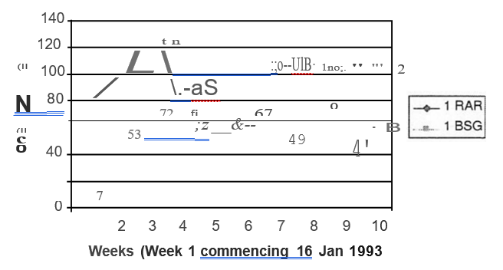
Figure 1: Attendances at Level 1 Facilities: Total Consultations (all Nationalities, all Reasons)
Figures 2 and 3 show attendances by category to the RAP 1 RAR, and 1 BSG respectively. The categories used are those laid down by the joint Task Force Surgeon (the ranking US military medical corps person in theatre). The category ‘G IT’ includes diarrhoea.
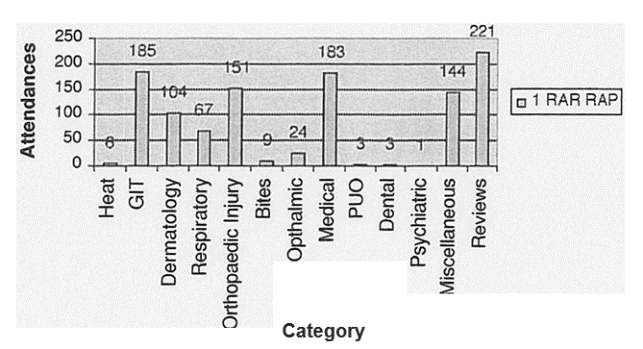
Figure 2: Attendance at 1 RAR RAP by Category: 16 Jan- 27 Mar 93
The category ‘Orthopaedic’ includes all injuries, no matter how severe, while URTI’s are included in the ‘Respiratory’ category
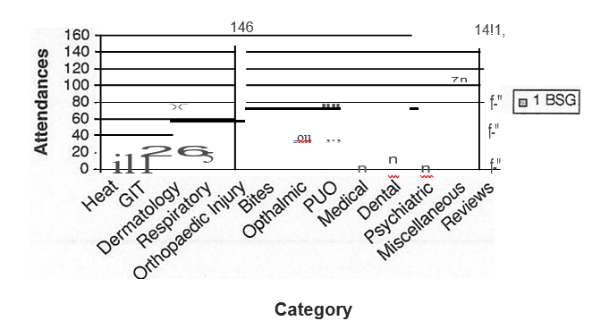
Figure 3: Attendance at Treatment Section 1 BSG by Category: 16 Jan – 27 Mar 93. [Note: Unit was co-located with Dental Section]
ADMISSIONS
Figure 4 shows the admissions to the Level 2 facility by category.
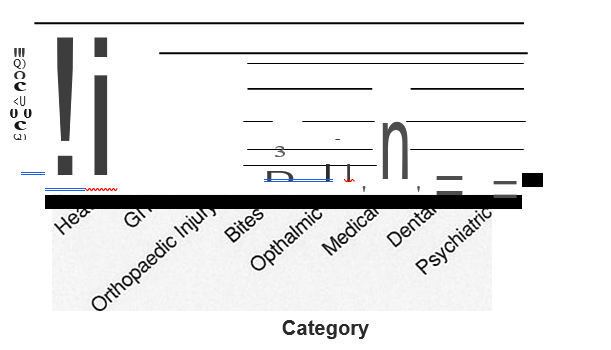
Figure 4: Admissions to Treatment Section 1 BSG by Category: 16 Jan- 27 Mar 93.
EVACUATIONS TO LEVEL 3
Only one Australian required inpatient care in a Level 3 facility. This was a member who developed severe bilateral keratitis, conjunctivitis and scleritis after some tree sap entered his eyes. He was admitted under the ophthalmologist at the 86th Evacuation Hospital.
Two US casualties were evacuated to the 86th Evacuation Hospital. One required cervical spine x-rays after a fall, and the other suffered a fractured femur in an MVA.
Two Somali battle casualties were evacuated for surgery. They were injured in contact with an Australian patrol. One had a gunshot wound in his chest and left arm, while the other had a gunshot wound of his right knee.
Five other Somali casualties (three injured by bandit activity, one by Australian fire, and one in an MVA) were evacuated to the local hospital in Baidoa after stabilisation at 1 BSG.
DISCUSSION
The dependency of the BSG was around 90 to 100 Australian troops, while 1 RAR RAP catered for 800. The US engineer elements were close to the BSG and presented for Level 1 care while in the area (from early February to early March).
The high number of orthopaedic consultations is because members were encouraged to present early with all wounds so thorough cleaning with antiseptics could occur. The incidence of wound infection was low with this policy.
Of the 144 GIT cases, 78 were for diarrhoeal illness. All GIT admissions had diarrhoea as a component of their illness. One faecal specimen was positive for shigella (out of 15 specimens sent) although another five cases received norfloxacin because of bloody diarrhea and failure to respond to 36 hours nil by mouth.
Malaria chemoprophylaxis was in the form of doxycycline 100 mg daily. The majority of members found they could only tolerate this by taking it with meals. Eight people were changed to mefloquine (25mg weekly) because of adverse reactions to the doxycycline. Reasons were:
- known allergy to doxycycline (1)
- photosensitivity rash on hands (5)
- severe indigestion (2)
The consultation rate for the forces was 153 per week (15.3% of the dependency). This is consistent with the author’s experience on major exercises in Australia. The admission rate to Level 2 was seven per week or 0.7% of the dependency. This is much lower than the admission rate Medical Company 3 BASB experienced during Exercise K92 (the total dependency for that exercise is not known; however, the Company had 90 non-exercise admissions in two weeks). Possible reasons for this include:
- The environment in Somalia has been less harsh than that in Australia’s “Top End”.
- Most of the members of the Force live in Townsville and acclimatisation was not as difficult as it might have been.
- The longer duration of the deployment and a staged assumption of the Battalion Groups role allowed an adequate acclimatisation period. There was no frantic rush to get the most out of the “training dollar”.
- There were very few members deployed on the operation with pre-existing chronic health problems.
The admission rate to Level 3 care for the Australian Force was exceptionally low (one patient out of 930 in 10 weeks). Possible reasons for this include:
- A long holding policy for the Treatment Section (10 days).
- The lack of conditions requiring surgery. There were no battle casualties requiring surgery among the Australians, no significant non-battle casualty trauma, and no routine surgical problems (not even a hint of appendicitis).
- An excellent preventive medicine programme consisting of:
enforcement of preventive measures throughout the chain of command (long clothing after dark, closed footwear at all times except asleep, mosquito nets up at night); early presentations of illness and injuries; an aggressive vector control programme (which included permethrin impregnation, spot spraying of accommodation areas and area spraying); and constant monitoring of water quality.
CONCLUSION
Operation Solace has six weeks to go at the time of writing. There is no significant reason to expect the attendance rate to vary significantly from that reported. A rate of attendance to Level 1 facilities of 20% and an admission rate to Level 2 facilities of 1% seems an appropriate rate for medical planning purposes for
future similar activities.