
Commander Neil Westphalen, Royal Australian Navy
23 November 2018
Dear Sir,
The July 2018 JMVH article regarding paramedics in the Australian Defence Force (ADF)1 requires further elaboration regarding its scope and conclusions.
The article describes how the expanding professional profile of paramedics in the civilian health system is not being reflected in current career options within the ADF, and that new roles could be based on Physician Assistant and Emergency Care Practitioner roles, as implemented in the United States and United Kingdom respectively. It then indicates that, although developing roles for paramedics would require organisational change, it does not replace the need for medics or medical and nursing officers. Finally, the article advocates the need to identify a best-fit role that recognises paramedic education, skill and experience on comparable terms as other ADF health professionals.
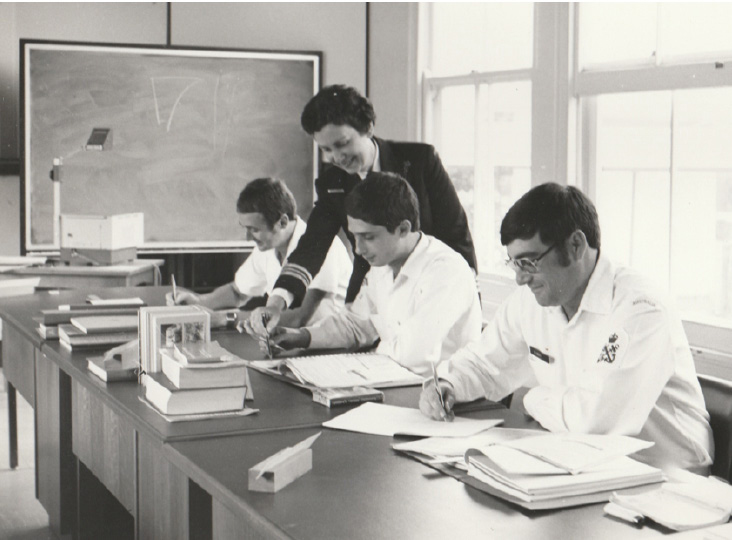
The author seems unaware of the long history and extent to which paramedic or ‘paramedic-like’ health practitioners have within the ADF, in particular Navy. The first ‘proto-paramedic’ course was developed at the RAN Medical Training School (MTS) at HMAS Cerberus in 1981, in response to an ongoing shortfall in Navy medical officer recruiting after the Vietnam War that precluded the previous practice of putting doctors aboard every Fleet unit.2
The Advanced Clinical Course (ACC) was developed and managed by Lieutenant Commander Sheena Frances Macdougall RANNS, supported by (among others) the Officer In Charge MTS (Lieutenant Commander Phillip John ‘Phil’ Davies RAN), the MTS Chief Instructor (Chief Petty Officer MEDL John Robert Hornsby), and the Medical Officers In Charge RAN Hospital Cerberus (Commander Geoffrey James Alexander ‘Geoff’ Bayliss followed by Commander Kerry Ronald Delaney RAN). Lieutenant Commander Macdougall had extensive experience as a theatre sister and was responsible for developing a range of Navy medical courses since the late 1960s; Lieutenant Commander Davies was an ex-operating Paramedics in the ADF – A Time For Change? theatre sailor with extensive seagoing experience; Commander Bayliss was a general physician and Commander Delaney an anaesthetist.3
In many respects, the ACC was ahead of its time: information sought from civilian ambulance services and other navies regarding their courses was conspicuously absent, to the extent that some of these organisations requested the ACC documentation. It therefore became necessary to use computergenerated clinical incidence data (derived from the six-monthly medical journals produced by all fleet units) to ascertain the most common, and the most important, medical conditions to be expected at sea.4
The next challenge entailed balancing what the medical officers believed the ACC sailors needed to know, against the instructor feedback regarding their ability to understand and apply it. Hence, despite Navy Office direction, the ACC had considerable emphasis on basic anatomy, physiology, history taking and examination, while its scope became much broader than nursing care and medical emergencies.5
The first course commenced after three months’ development, when it was only about 25 per cent complete. Lessons were therefore often still being written the night before delivery, while course instruction was initially provided by more-or-less anyone with the relevant background knowledge and interest. The first ACC was six months’ duration but subsequent courses have been up to 12.6
The benefit of the ACC quickly became apparent when a sailor ruptured his urethra falling across a hatchway, for which he received a suprapubic catheter for the three days it took for his ship to return alongside. A commanding officer with a myocardial infarction likewise demonstrated the ACC’s benefits with respect to teaching, at times, very junior medical sailors how to take charge of such patients. At the same time, the ACC and subsequent courses’
premise on ‘first doing no harm’ remains central to the ethos of the Navy Health Services.7
The ACC became a prerequisite for medical sailor promotion to Petty Officer in about 1988. It was renamed the ‘Phase 3’ course sometime during the early 1990s, and received its current Clinical Manager (CM) title in the early-mid 2000s. The CM course has since been conducted by several civilian tertiary institutions, with additional Navy-specific modules at the RAN Medical School at HMAS Penguin.
It is my understanding that the current ADF Medics Course results in a civilian Diploma of Paramedic Practice, and that the current 10-month Navy CM course substantially contributes towards a bachelor degree, with only a small number of additional modules required thereafter to achieve this qualification. While they are not supported by Defence, I also understand that several CMs are undertaking postgraduate education towards a range of master’s qualifications, including paramedic practice.
It should also be noted that apart from a small number of ex-dental sailors, all other Permanent Navy Medical Administration Officers (MAO) are ex-medical sailor changeovers with prior CM experience. Although their MAO roles often (but not always) preclude them from undertaking clinical roles (usually because of currency maintenance difficulties), they clearly have an excellent understanding of paramedic training and scopes of practice. Likewise, experienced Navy medical and dental officers who work with CMs every day have a very good understanding of these
attributes.
Referring again to the article, the author also seems unaware that Navy employed two nursing officers as Nurse Practitioners (NPs) from 2009, although the intent to employ them in a seagoing role regrettably did not come to fruition. Furthermore, Navy also had at least one Australian-trained Physician Assistant (PA) at that time, who unfortunately could not be employed as such because the civilian regulatory environment did not yet exist (as the article correctly indicates).
Notwithstanding their considerable overlap, it is important to appreciate the differences between NPs and PAs: in short, PAs work under medical officer direction (which can be conducted remotely), while NPs have a specific scope of practice.
It is also important to understand how Navy employs its CMs. Following their training, they usually undergo a brief period of consolidation ashore before joining their ship as a Leading Seaman or newly promoted Petty Officer, for a posting of up to two years, which may include a cumulative total of up to 18 months at sea.
During this time, CMs only have a medical officer embarked when required for overseas deployments, subject to availability. On coming ashore, they undertake a range of clinical and non-clinical supervisory duties at a ‘garrison’ health facility, or a range of teaching or other duties elsewhere. CMs can expect several such posting cycles throughout their Navy career.
CMs provide protocol-based treatment in accordance with the Primary Clinical Care Manual provided by Queensland Health,8 under remote supervision by the Duty Fleet Medical Officer at Fleet Headquarters in Sydney. It should be noted that this process is routinely applied for ships deployed as far from Australia in recent times as off Casablanca in the Atlantic Ocean, and between Guam, Midway Island and Oahu in the Pacific.
However, it is also essential to appreciate the full range of medical functions and roles undertaken by CMs during their sea time. These include:
- Implementation and compliance with the extant operational health support plan produced by Fleet Headquarters or Joint Operations Command.
- Initiating and/or providing maritime forward aeromedical evacuations (AME) to/from their ship, and/or preparing patients for tactical and strategic AME as directed. It should be noted maritime time/distance considerations mean this can take several days.9
- Supporting maritime humanitarian aid / disaster relief operations (including merchant ships).
- Supporting (and in some cases providing) military medicine capabilities such as aviation, submarine and (especially) diving medicine.
- Facilitating/supporting the assessment of ADF personnel regarding their health-related suitability for employment and deployment (typically via the ADF Medical Employment Classification System).
- Facilitating occupational and environmental health services as required (in particular shipboard occupational hygiene).
- Supporting health promotion services (in particular vaccination programs).
- Providing shipboard treatment services during operations, exercises and other deployments including
- routine primary health care
- health support for ‘routine’ seagoing Disease and Non-Battle Injury (DNBI) emergencies (typically workplace and sporting injuries and acute mental health events)
- health support for ‘special’ seagoing DNBI emergencies such as toxic hazards, man overboard, and aviation, diving and submarine incidents and accidents
- limited seagoing DNBI inpatient services
- initial Battle Casualty (BCas) resuscitation and stabilisation pending evacuation (which may take several days).
It can therefore be seen that shipboard treatment services constitutes only one of the functions and roles undertaken by CMs. Furthermore, it is also essential to appreciate the Fundamental Inputs to Capability (FIC) tasks they also undertake to bring these functions and roles to life, such as:
- Managing their junior medical sailors if/when embarked, including individual training. The latter also includes ship’s company first aid.
- Conduct collective training, in particular Ship’s Medical Emergency Teams (SMET) training and exercises.
- Maintaining their ship’s Action Medical Organisation.
- Maintaining their ship’s medical facilities, such as the sickbay, emergency operating stations and first aid posts.
- Maintaining their ship’s medical stores, in collaboration with the ship’s (non-medical) Supply Department.
- Managing and utilising their ship’s medical and other information technology systems.
- Participating in their ships’ military health command and management functions via their commanding officer and several health technical authorities (‘garrison’ health services when alongside, Joint Operations Command when force assigned; otherwise Fleet Headquarters when at sea).
- Seeking the administrative and other support functions they require from their ship’s nonhealth staff (in particular the Supply Department who provide most of the SMETs).10
Hence, it is Navy’s CMs rather than its professional health officers, who are the mainstay of health support for ADF maritime operations. To conclude, Navy’s nearly 40 years of experience with its CMs confirm that the article has considerable merit with respect to advocating a role for paramedics that reflects their education and expertise. Among other benefits, expanding Navy CMs scope of clinical practice to finally include patients ashore as well as afloat would greatly facilitate their job satisfaction and therefore retention. Furthermore, their seagoing experience would greatly enhance the ADF’s health services with respect to supporting and sustaining an occupational and environmental health paradigm.11
There are however, some caveats:
- The successful introduction of the first ACC sailors in 1981 on the one hand, and the lack of progress with respect to Navy NPs and PAs since 2009 on the other, confirm the need to identify a health capability gap first and then ascertaining the best option to fill it.
- It is also essential that the appropriate civilian regulatory environment exists such that Defence health providers for non-deployed ADF members have the same scope of practice as they would for Australian civilians.
- The scope of practice for Defence paramedics must extend far beyond pre-hospital emergencies. While these have much of the excitement and interest, the majority of their day-to-day workload can be expected to entail far more mundane primary healthcare conditions (in particular workplace and/or sports injuries, and mental health issues)
- Furthermore, future Navy CMs, PAs and NPs must also accept that most of their overall workload will continue to pertain to the non-treatment-related functions and roles, and the FIC management listed previously.
- Finally, the significant career implications with respect to ADF members whose long-term suitability for employment and deployment is in doubt, means that the medical decision-making for such cases must remain the responsibility of the treating paramedic’s supervising medical officer. This further reinforces the assertion elsewhere that the need for all Defence primary healthcare providers to be good clinicians, must be comparable to their need to understand the duties their patients undertake.12
I trust this letter is a constructive elaboration of the issues raised in the article.
Disclaimer
The views expressed in this article are mine alone. They do not necessarily reflect those of the RAN or any other organisations mentioned. Likewise, any factual errors are my responsibility.
Yours sincerely
Dr Neil Westphalen
Commander, Royal Australian Navy